Fiesta Mayor
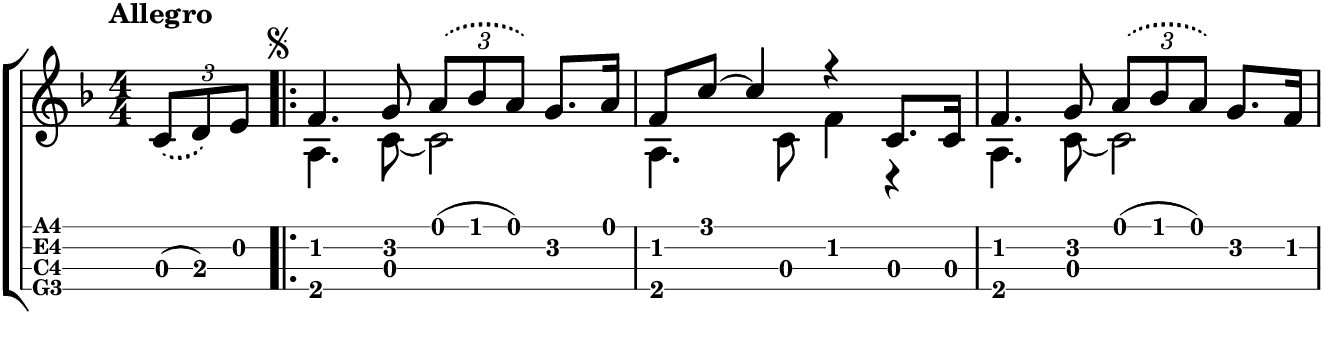
Folk songs heard in Aragon arranged for low G ukulele
Choan Gálvez (born in Zaragoza, Spain) has had a long relationship with traditional Aragonese music: he started playing bandurria when he was nine years old, and the bulk of the repertoire of the students’ ensemble he played with consisted of jotas and local folk music. In his teens, he played guitar with Peirot e Compaña, a five-member band that played Aragonese, Celtic, and world music spiced up with punk, rock, and metal styles.
He’s been playing some of the tunes included in this collection on the ukulele since his first day with the instrument. It was past time to formally arrange them, and a bunch more, and publish the (as far as we know) first collection of Aragonese folk music arranged for solo ukulele.
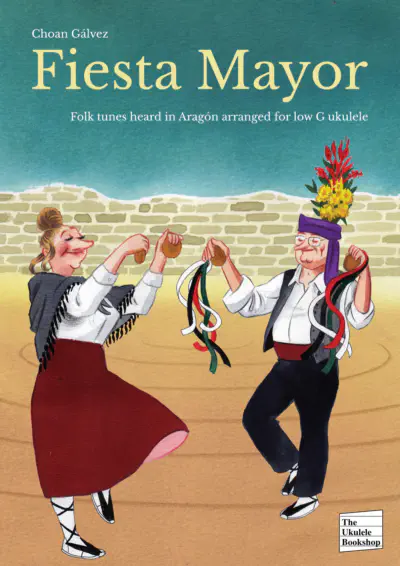
Cover artwork by Javi Gómez.
Songs, dances and mudanzas
This is a collection inspired by Aragonese folk tunes, but the author does not intend to be faithful to tradition. In these arrangements, rhythms and melodies have been twisted, and modes and harmonies have been shamelessly altered. While this work showcases the diversity of Aragonese musical folklore, it must not be taken as an accurate portrait. Proper scholars will take care of such a task.
No me tires del manto
A song picked up by Mingote (1950) in Lécera, Zaragoza. La Birolla (2004) includes a nice version.
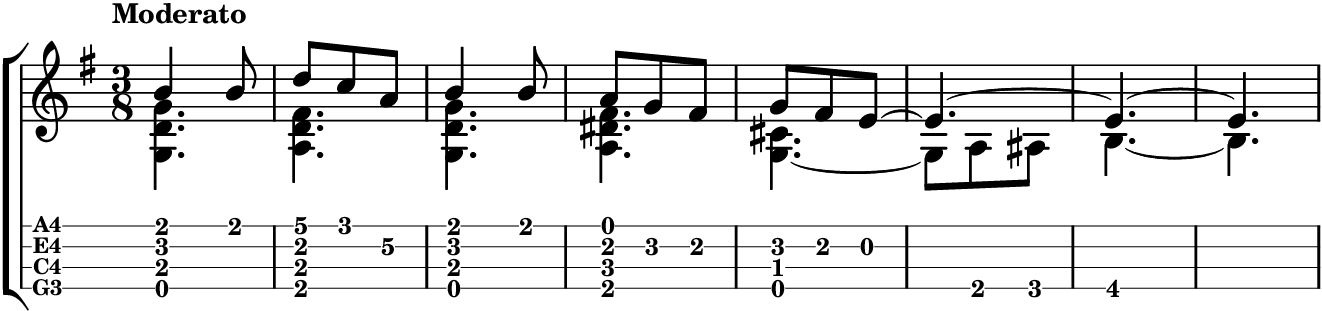
Baile de la gaita
A jota from Bujaraloz, in the province of Zaragoza, traditionally performed on the gaita de boto. Very interesting versions by Cornamusa (1987) and Biella Nuei (1998).
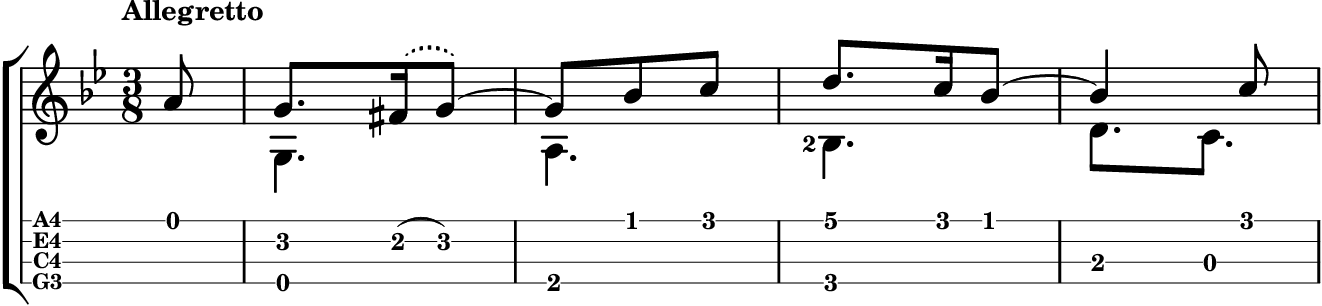
La zarza
Mudanza from the dance of Robres (Huesca), where it’s performed on the gaita de boto. This tune also appears, with small variations, in other dances from the Monegros area.
Transcription included in Mur Bernad (1986).
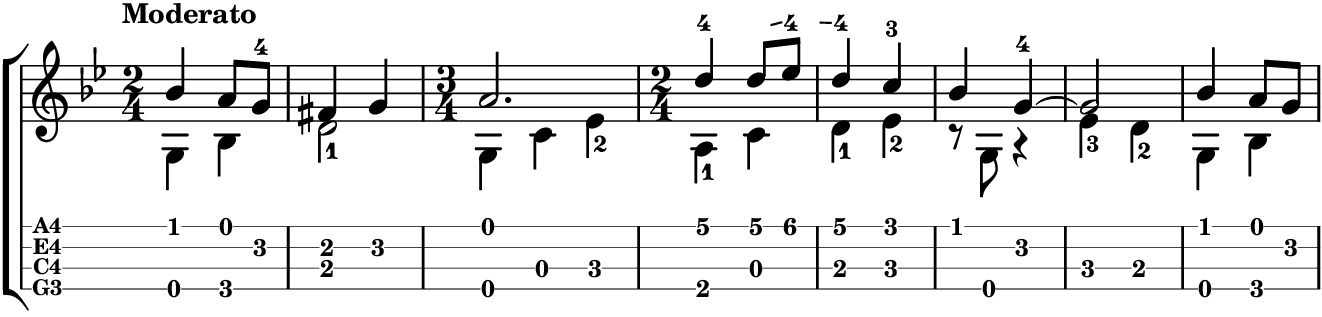
Vals de Albelda
Also known as “Coro de l’estisora”. This is a traditional Carnival song from Albelda, province of Huesca. It was recorded by La Orquestina del Fabirol (1990) and, set up to ska rhythm, by Peirot e Compaña (1997).
Péinase la niña
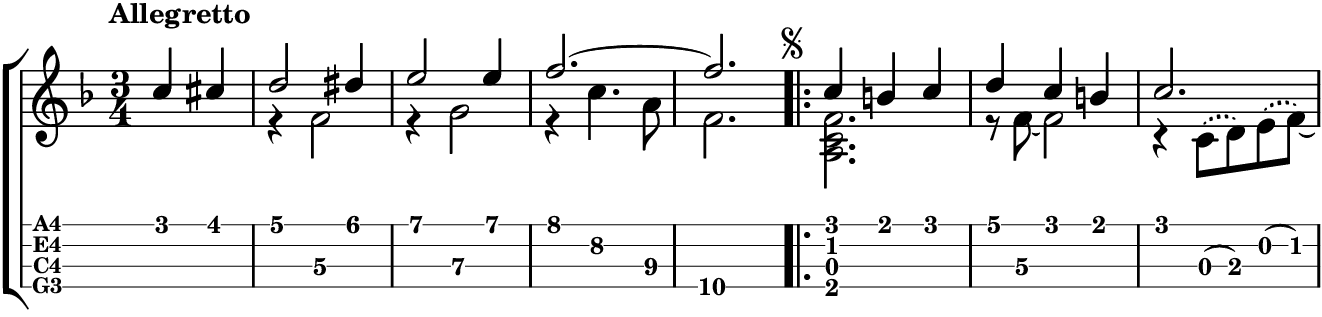
A mudanza with swords from the dance of Lanaja, in Huesca. We first heard it through the recording included in La tradición musical en España, vol.8: Monegros (1990). In the representation of this dance, the music is performed by a varying ensemble of local aficionados.
Notated in Mur Bernad (1986).
Mazurca de Albarracín
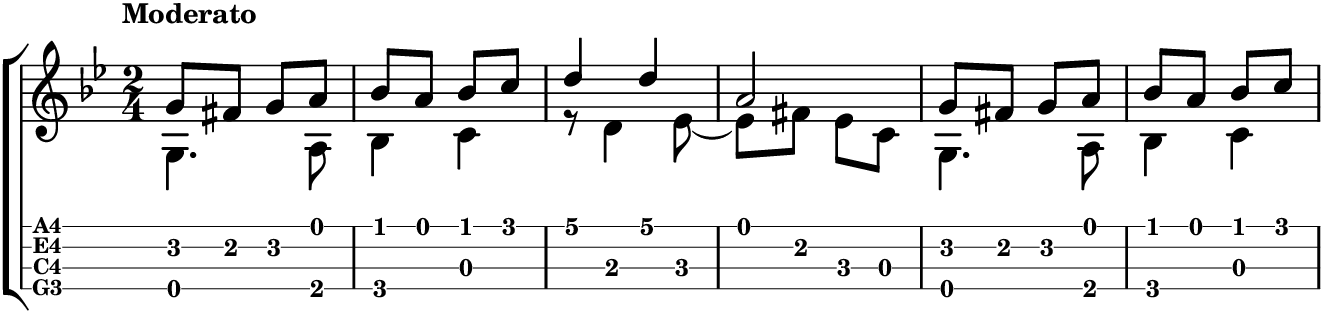
Popular mazurka from Albarracín (Teruel). Transcribed by Coscollar (1987). An arrangement for rondalla appears in Segunda muestra de folklore aragonés (1981).
Aurora vieja
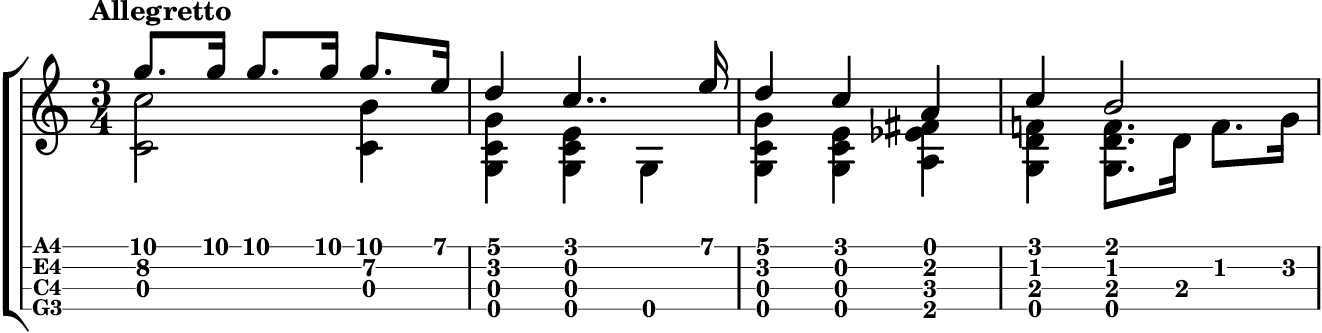
Another bagpipe tune, picked up in Sariñena (Huesca). We based our arrangement in the rendition sung by Antonio Susín, who was mayoral of the dance, transcribed by Mur Bernad (1986). Biella Nuei (1998) includes a beautiful arrangement for bagpipe and male choir.
Ball de Benás
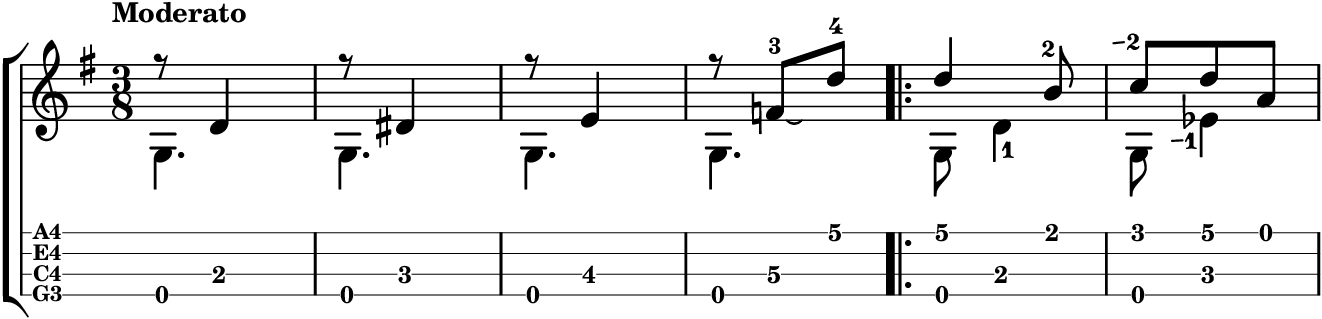
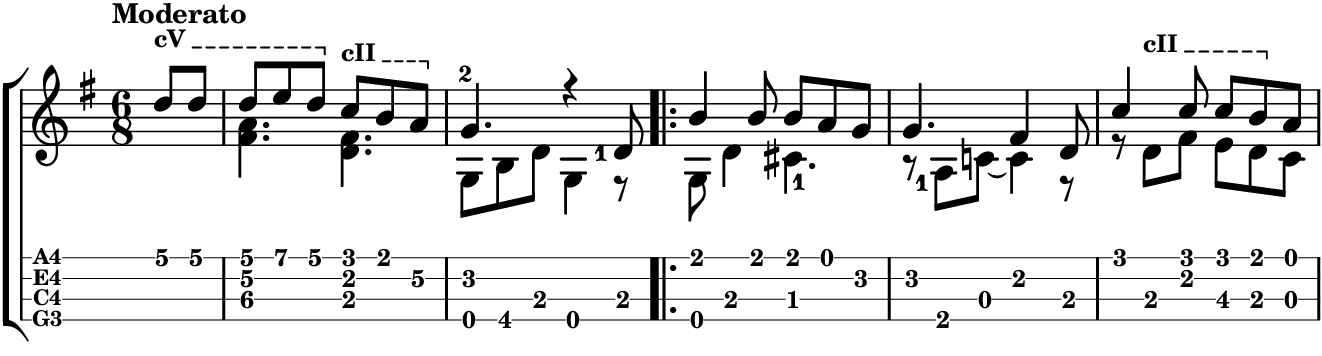
Traditional from Benasque, Huesca (also San Chuan de Plan and Visiedo). The 6/8 section shares melody with the Hymn of Riego (official hymn of Reino de las Españas from 1820 to 1823) and was employed as unofficial hymn of the República Española between 1931 and 1939. The waltz section is known as “Les marradetes”. These tunes are danced to in the Ball des omes and the Ball de les dones in Benasque. The cover illustration is inspired by the latter.
It’s been recorded, among others, by Hato de Foces (1984) and Biella Nuei (1994).
Lezaun (2024) includes an arrangement for two dulzainas; Garcés (1999) transcribes the melodies of both “Ball” and “Les marradetes”.
El reloj de la pasión
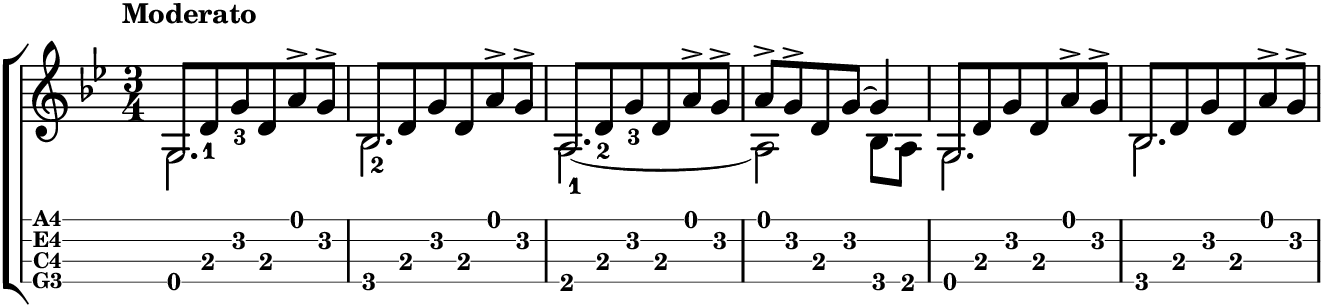
A church’s ballad narrating Christ’s Passion, sung on Holy Thursday. Same lyrics are set to different tunes in a variety of locations. Our arrangement take as its starting the melodies collected by Arnaudas (1927) en El Cuervo y Torres de Albarracín, Teruel. Chicotén (1978) used these tunes in their “Suite a Teruel”, Maüt (2010) recorded them in “El Cuervo”.
Mayos de la Codoñera
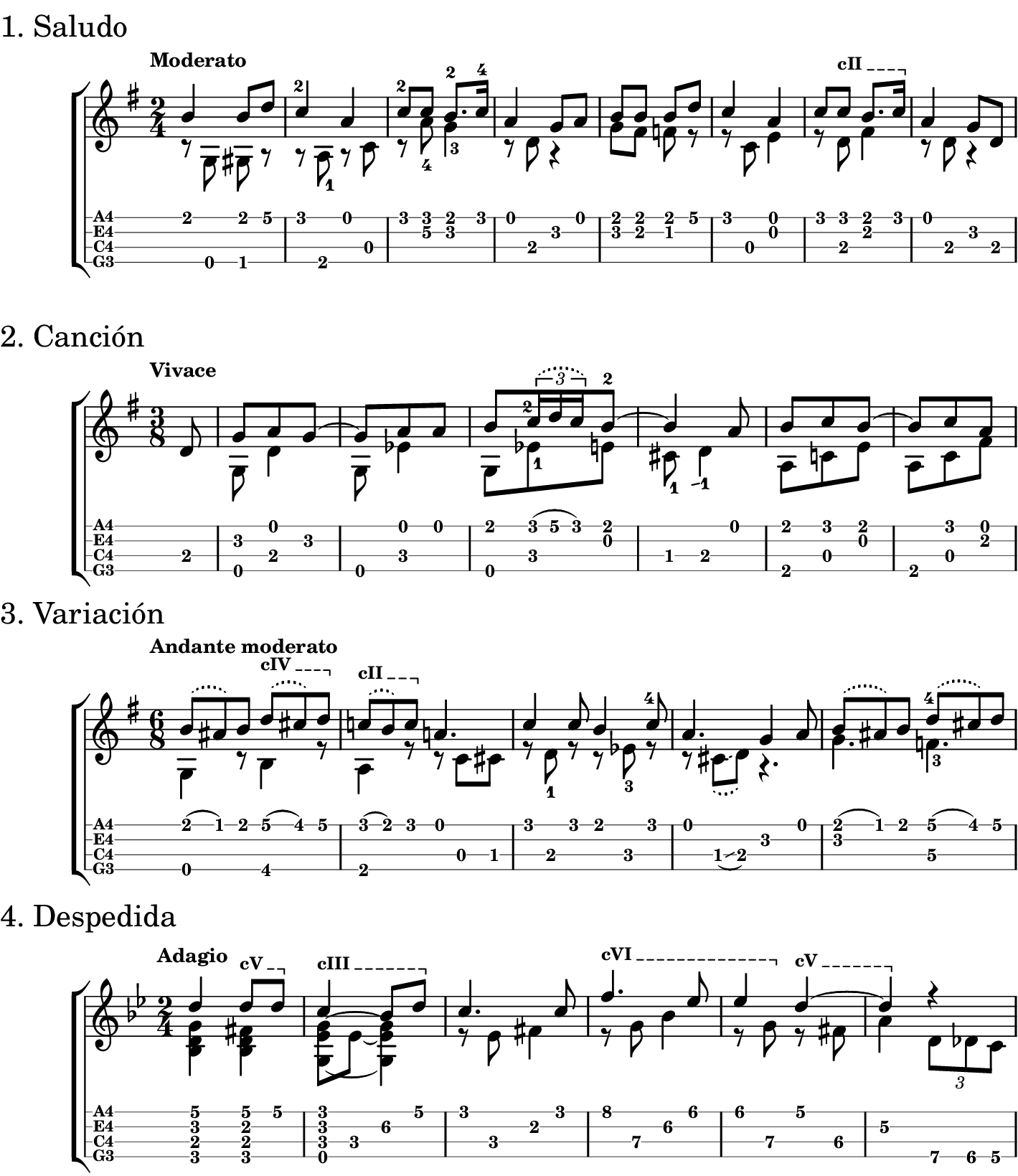
Arnaudas (1927) includes a good number of songs collected in La Codoñera, Teruel. We’ve made a four-movement little suite using some of them. There are great version of “Despedida” in La Bullonera (1983), Eliseo Parra (2000), and celiaGG (2023). The arrangement of “Canción” is inspired by the one inLos Dulzaineros de Alcañiz (1994).
Gigantes y cabezudos
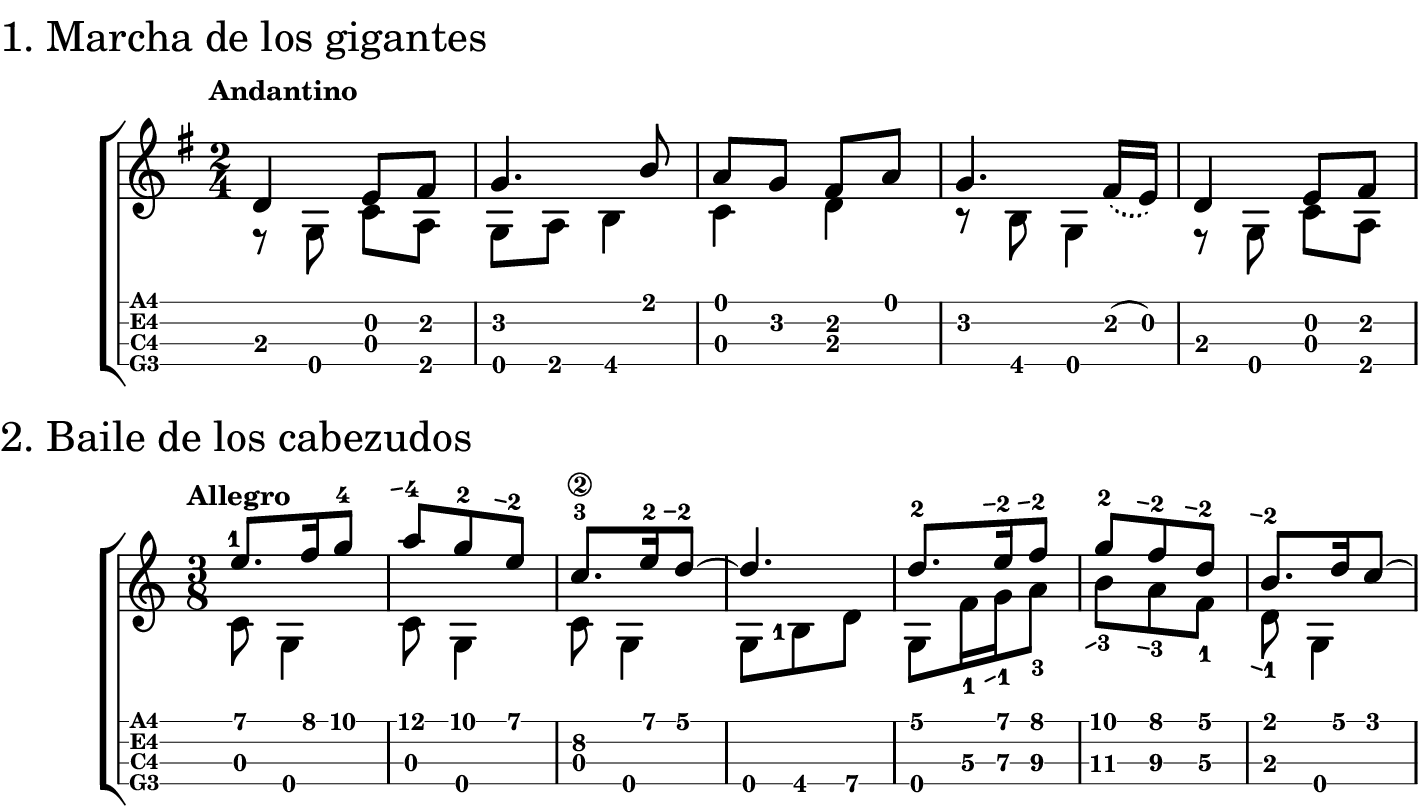
Our arrangement includes “Marcha de los gigantes” and “Baile de los cabezudos”, following the transcription by D. F. Triviño in Mingote (1950). Both tunes were recorded by Los Dulzaineros de Alcañiz (1994).
Habanera del tío tieso
A piece for dulzaina that Camilo Ronzano learned from Julián Andolz, alias Tío Tieso, in Las Parras de Castellote, Teruel. Transcribed by Coscollar (1987)–adapted to 7/8–, and Lezaun (2024), who arrages the tune for two dulzainas. The performance by Camilo Ronzano (1992) is second to none. Joaquín Pardinilla (2018) made a delicious arrangement with a modern Cuban flavour.
Discography
- Archivo de tradición oral: La gaita en los Monegros. (1999). Aragón-LCD Prames.
- Biella Nuei. (1994). Las aves y las flores Biella Nuei-Saga.
- Biella Nuei. (1997). Solombra Coda Out.
- Camilo Ronzano. (1992). Gaitero de Las Parras de Castellote Tecnosaga.
- celiaGG. (2023). Para jotera yo!
- Chicotén. (1978). Chicotén Movieplay.
- Cornamusa. (1987). Expresión joven'87 Ondas Divididas.
- Eliseo Parra. (2000). Chicotén 3: Fiesta en Teruel .
- Hato de foces. (1984). En plena calle Sonifolk.
- La Birolla. (2003). Debán d'o camín Codaout.
- La Bullonera. (1983). Del folklore aragonés (homenaje a Arnaudas) RCA.
- La Orquestina del Fabirol. (1990). Suda, suda, fabirol!! Sonifolk.
- La tradición musical en España, vol. 8: Monegros. (1990). Tecnosaga.
- Los Dulzaineros de Alcañiz. (1994). Los Dulzaineros de Alcañiz SAGA.
- Maut. (2011). 1.0.
- Peirot e Compaña. (1997). Peirot e Compaña & A Bocajarro Entalto Crápula.
- Segunda muestra de folklore aragonés. (1981). Guimbarda.
Bibliography
- Arnaudas Larrodé, Miguel (1981). Colección de cantos populares de la provincia de Teruel. Instituto de Estudios Turolenses. (Original work published in 1927)
- Beltrán Martínez, Antonio (1982). El dance aragonés. Caja de Ahorros de la Inmaculada.
- Blecua Vitales, Martín, and Pedro Mir Tierz (1998). La gaita de boto aragonesa. Rolde de Estudios Aragoneses.
- Garcés, Gregorio (1999). Cancionero popular del alto aragón. (Blas Coscollar, Ed.). Instituto de Estudios Altoaragoneses.
- Coscollar, Blas (1987). El libro de la dulzaina aragonesa: Método y repertorio. Excmo. Ayuntamiento de Zaragoza.
- Larrea Palacín, Arcadio (2024). El dance aragonés y las representaciones de moros y cristianos. (Manuela Adamo, Ed.). Institución Fernando el Católico. (Original work published in 1952)
- Lezaun, Diago (2024). Cuaderno de repertorio: 222 piezas para 2 dulzaines. Dulzaineros del Bajo Aragón.
- Mingote, Ángel (1981). Cancionero musical de la provincia de Zaragoza. Institución Fernando el Católico. (Original work published in 1950)
- Mur Bernad, Juan José de (1986). Cancionero popular de la provincia de Huesca. Claret.